
Diet & Weight
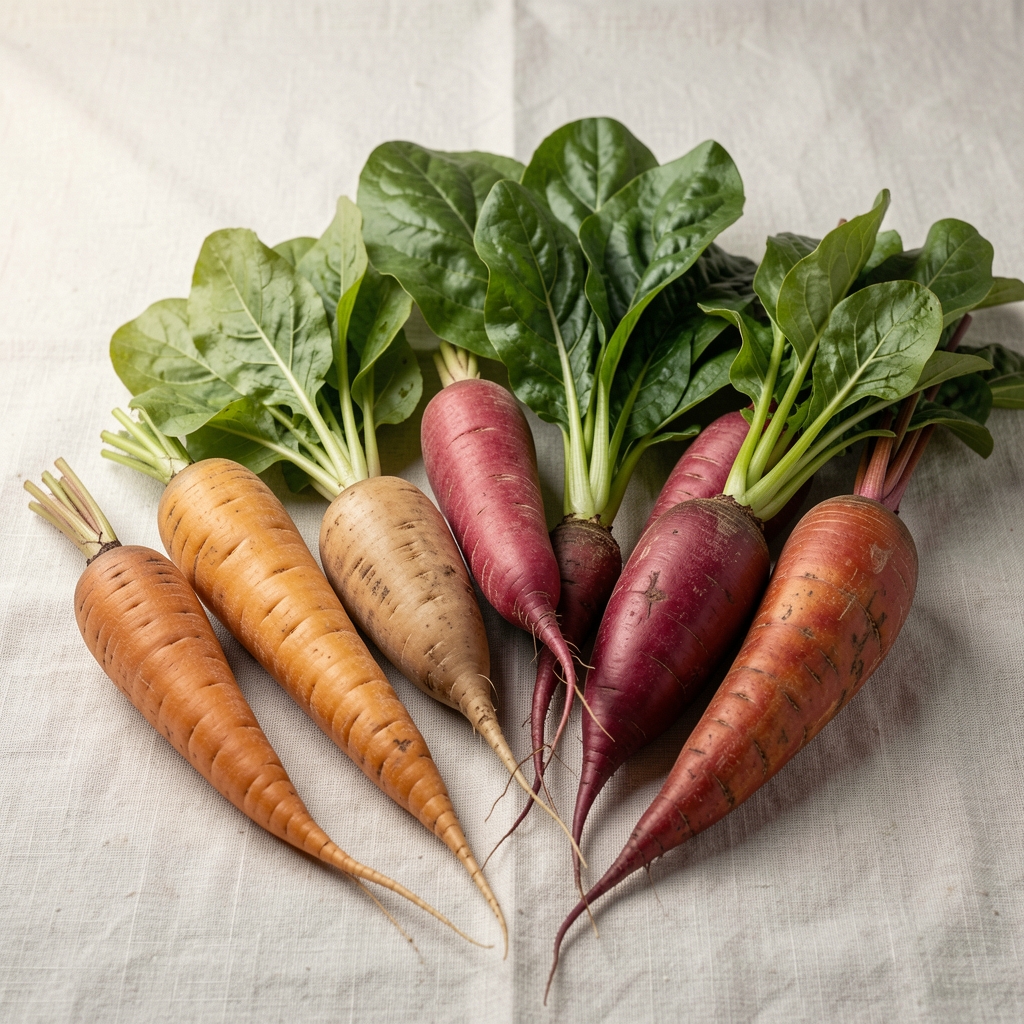
A weekly vegetable and fruit record is, at its most reduced, a count and a variety. How many different vegetables appeared on the plate this week? How many portions of fruit were consumed, and in what form? Were they fresh, cooked, preserved? Were they local and seasonal, or transported from elsewhere? The nutritionist's interest in these questions is not taxonomic. It is relational. The composition of the weekly produce basket does not describe nutrition in isolation; it describes the intersection of habit, accessibility, season, and attention.
This record has been kept, with varying degrees of consistency, for fourteen consecutive weeks. What it reveals is less dramatic and more interesting than a single-week snapshot would suggest. The patterns that emerge across fourteen weeks carry a texture of daily life that one week cannot hold: the week when the market closed early and the vegetable drawer went unstocked; the week of cold March weather when root vegetables dominated because they were what remained from the previous weekend's shop; the week in mid-April when the first outdoor-grown English asparagus appeared and the plate changed almost without intention.
The published guidance on vegetable and fruit intake uses portions as its primary unit, but the nutritionist's record quickly encounters the elasticity of that concept in practice. A portion of spinach eaten raw in a salad occupies a very different physical volume from the same mass of spinach wilted in a pan. A portion of dried apricots represents a compressed caloric and sugar concentration that differs substantially from the equivalent mass of fresh apricot. These differences matter not because the portion is a precise unit that should be measured but because the act of recording forces an engagement with what a portion actually means across different preparations.
For the purposes of this record, the working definition is pragmatic: a portion is the amount that would occupy roughly one cupped hand in its prepared state. This is loose enough to absorb the compression of cooking and the variation between preparation methods, without requiring weighing or measuring equipment that most people do not have at hand during meal preparation. It introduces enough consistency to allow comparison across weeks, while acknowledging that the comparison is approximate.
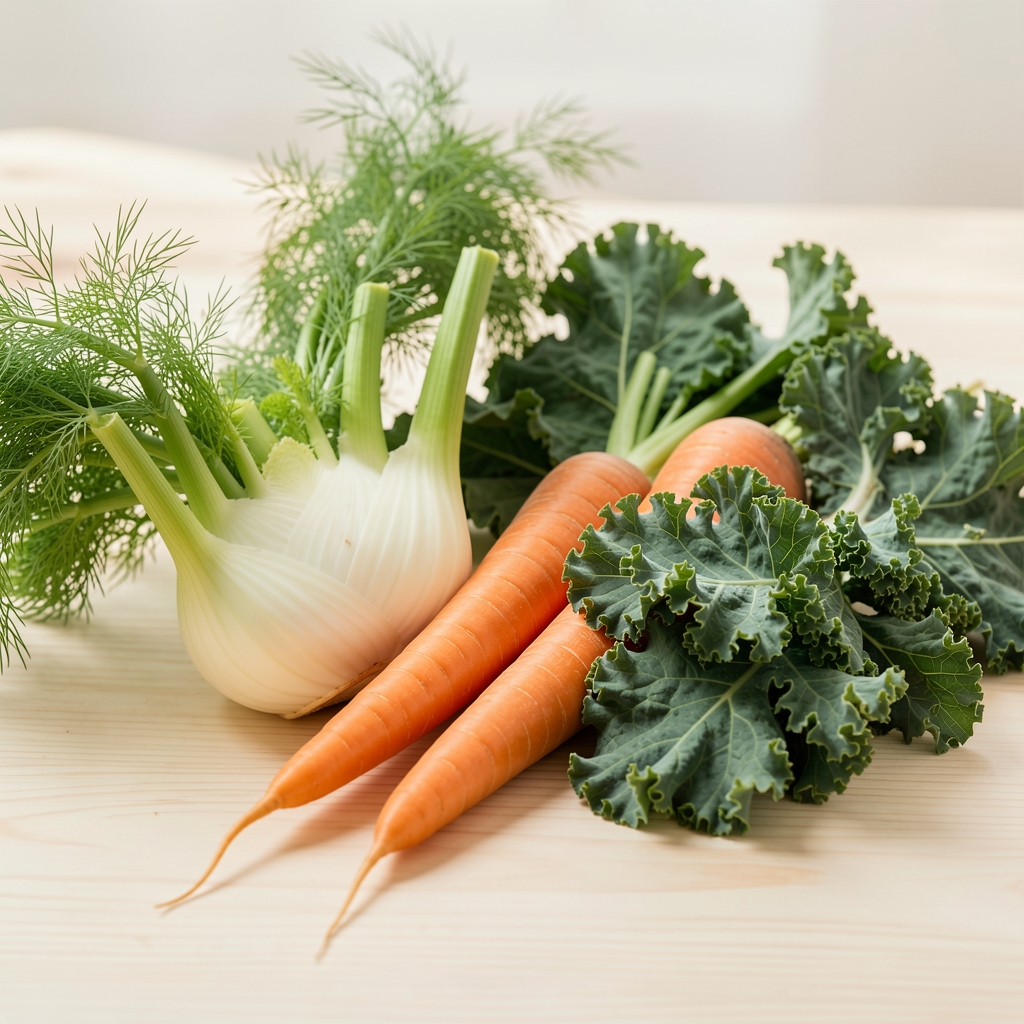
The most consistent finding across the fourteen weeks is the degree to which the seasonal availability of produce structures the record without deliberate intention. In the weeks of January and February, the record shows a heavy reliance on root vegetables — parsnip, celeriac, carrot, swede — alongside stored brassicas like cabbage and kale. These are vegetables that have been in the supply chain since autumn. They are familiar, predictable, and available in most greengrocers and supermarkets throughout the winter months. Fruit in this period is dominated by citrus: blood oranges, clementines, grapefruit. Apples from autumn storage appear regularly. The berry varieties are mostly absent, or present only in imported and frozen forms.
The shift that occurs in late February and early March is gradual but perceptible in the record. Purple sprouting broccoli appears. The variety of leafy greens in the salad section of the record expands. The citrus diminishes and begins to be replaced, towards the end of March, by the first English rhubarb, which is technically a vegetable used as a fruit. By the time the first outdoor asparagus season arrives in April, the range of produce in the weekly record has broadened considerably from its winter configuration. This is not a planned dietary intervention. It is the passive effect of availability operating on a person who shops in markets and independent grocers rather than exclusively in supermarkets that standardise supply year-round.
The nutritional implications of this seasonal variation are worth noting in the record, not as a reason to praise or criticise any particular season's eating, but as an observation about how the body's nutritional input shifts across the year in ways that dietary assessment at a single point in time would miss. A nutritional assessment conducted in January would show a different vegetable and fruit profile from one conducted in April, not because the person's preferences or intentions have changed, but because the season has changed what is readily available and appealing.
A recurring pattern in the record is the week that begins with a full vegetable drawer and ends with several items composted uneaten. The aspiration to eat a wide variety of fresh produce across the week is clear from the shopping record. The execution is consistently compromised by the particular texture of that week's demands. Busy evenings push the preparation of fresh vegetables toward simpler alternatives. Tiredness at the end of a working day makes the vegetable drawer feel like an obstacle rather than a resource.
The record, by making this pattern visible, creates a form of feedback that does not prescribe a correction but invites a structural adjustment. If fresh spinach is consistently wasted because it requires washing and preparation, the substitution of pre-washed watercress or pre-prepared stir-fry vegetable mixes reduces the friction without abandoning the nutritional intent. This kind of environmental adjustment — changing what is available and how accessible it is — tends to be more durable than relying on motivation at the moment of cooking.
The record also reveals a consistent pattern of fruit consumption being higher at breakfast and lower at other meals. Fruit appears in the morning in the form of banana with porridge, or a handful of berries with yoghurt, or sliced orange alongside toast. At lunch and dinner, fruit is structurally absent from most meals. This is not unusual in Northern European eating patterns, where fruit tends to occupy a breakfast or snacking role rather than appearing as a component of main meals. It is worth noting as an observation, because it suggests that the diversity of fruit in the weekly record is more limited than the quantity might imply: the same two or three fruits tend to recur, eaten at the same time of day, in the same preparations.
The weeks in the record that contain the highest vegetable variety are, without exception, the weeks that also contain the highest proportion of plant-based meals. This is a structural observation rather than a causal argument. When a meal is built around vegetables and legumes rather than around a protein centrepiece, the total number of vegetables in that meal tends to be higher. A lentil soup contains carrots, onion, celery, possibly tomato, possibly kale. A roasted chicken dinner, by contrast, might contain one or two vegetable sides. Both are nutritionally adequate. But the plant-centred meal architecture naturally generates more vegetable variety within each sitting.
This does not imply that plant-based eating is the only route to produce variety. It is possible to construct highly varied vegetable-rich plates around any protein source. But the record suggests that, in practice, the meal architecture influences the vegetable count more directly than the type of protein. Weeks in which the primary meals were soups, grain bowls, or vegetable-led stews showed the highest weekly produce diversity. Weeks dominated by protein-centred preparations showed lower vegetable counts, even when side dishes were present.
“Variety in the weekly produce record is not principally a matter of effort. It is a matter of what the meal architecture naturally draws in. The question is not which vegetables to choose, but how the meal is structured before vegetables are considered.”
Fruit presents a different pattern in the record from vegetables. Whereas vegetables require preparation and tend to feature in meals, fruit is typically consumed as a discrete event: a piece of fruit as a mid-morning snack, a bowl of berries with breakfast, a banana eaten in transit. This mode of consumption means that fruit intake is less dependent on meal architecture and more dependent on availability and habit. The person who keeps a bowl of fruit on the kitchen counter eats more fruit than the person who stores fruit in the refrigerator drawer. This is a well-documented finding in food environment research, and the record reflects it precisely: in the weeks when citrus fruit was kept in a visible bowl, the daily consumption record shows higher fruit intake. In the weeks when the fruit supply moved to the refrigerator, consumption dropped.
The variety of fruit in the weekly record is also significantly narrower than the variety of vegetables. Over fourteen weeks, the same four to six fruits appear with regularity: banana, apple, orange or clementine, berries (mostly blueberry and strawberry), and occasionally pear or kiwi. Exotic or less familiar fruits appear only in weeks when they were purchased with specific culinary intent — a mango for a particular salad preparation, a pomegranate for a recipe tried once. This narrowness is not a nutritional problem in itself, but it is worth noting as a structural characteristic of most people's fruit patterns: the variety that exists in the market is substantially wider than the variety that finds its way into the weekly record.
The vegetable and fruit record, like any record, has its own gaps and blind spots. It does not capture the nutritional density of the produce recorded. An organically grown carrot from a local farm and a supermarket carrot from a centralised supply chain both register as one portion of carrot in the record, though their nutritional profiles may differ. The record does not distinguish between preparation methods that preserve or diminish the nutritional content of vegetables — steaming versus prolonged boiling, for instance. And it does not capture the social dimension of produce consumption: the fruit eaten at a colleague's desk, the salad assembled by someone else at a shared meal, the vegetables consumed at a restaurant.
These gaps are acknowledged because they matter to a complete account of produce consumption but do not undermine the usefulness of the record as a structural tool. The goal of the weekly record is not to provide a precise nutritional analysis. It is to make the architecture of habitual produce consumption visible, so that patterns can be recognised, adjustments considered, and changes introduced at the level of habit and environment rather than willpower and calculation.
Harriet Ashcroft is a London-based nutrition writer and qualified food practitioner. Her field records on produce seasonality and dietary variety have been published in the Talomera Letters since its founding edition. She holds a particular interest in how the food environment shapes eating patterns without conscious deliberation.
Read another article